


SPG – Delivering Certainty at Any Scale

Learn more about the Strategic Projects Group in a Question and Answer style interview with team leader, Michael Polan
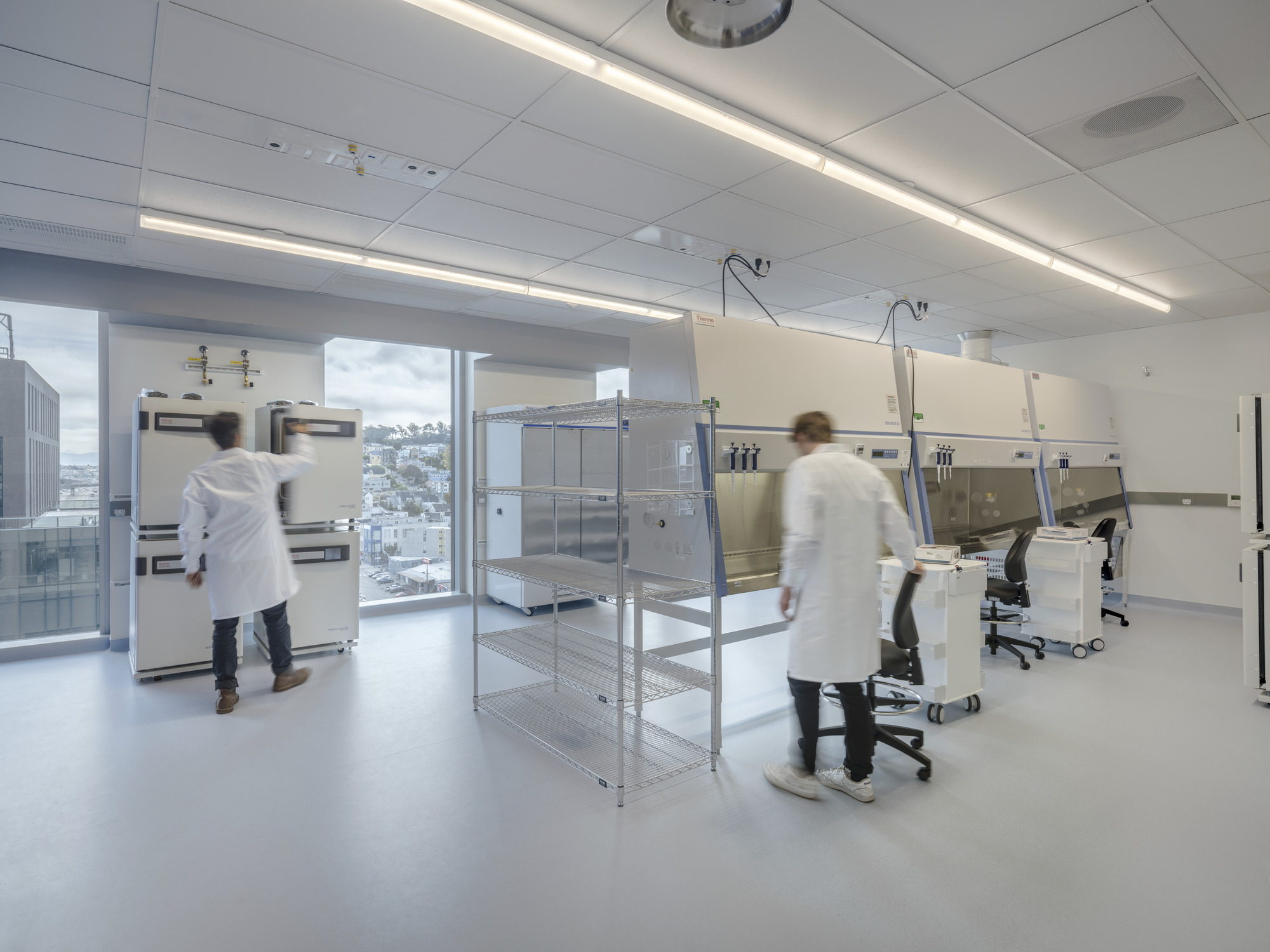
Built to perform where complexity, speed, and precision intersect, the Strategic Projects Group (SPG) serves as both risk remover and risk mitigator, combining the strength of a leading builder with the agility and experience of a specialty project team. SPG was created to solve a persistent challenge in the market: mission‑critical projects that may be modest in size but carry outsized risk, urgency, and strategic importance for clients—especially in healthcare, science, and advanced technology environments.
Regardless of scale and investment, XL’s SPG brings the same rigor, technical leadership, and predictability typically reserved for major capital programs. The result is a delivery model with high-caliber teams that adapt quicker and solve problems earlier, without sacrificing safety, continuity, or quality. From disciplined early planning to operationally sensitive execution and transparent decision-making, SPG is designed around one core principle: eliminate surprises, protect operations, and deliver certainty.
We sat down with Michael Polan, one of the leaders shaping XL’s SPG’s growth and philosophy, to discuss how the team is transforming the way clients experience scaled projects and why this approach is becoming a strategic advantage for critical environment clients navigating evolving regulatory, technology, and facility demands.
When you look at the Bay Area and broader California construction markets today, what persistent gaps do you see that SPG is uniquely positioned to solve?
Michael Polan: Across California, particularly in the Bay Area, we consistently see projects stalled or strained during extended preconstruction, validation, and entitlement phases. These early stages often require significant effort but do not always receive the same level of rigor or leadership attention as large capital programs. This happens at both the owner and the general contractor level. At the same time, “smaller” projects, often $500K to $15M, are frequently mission-critical initiatives for clients, supporting patient care, research continuity, or operational resilience. SPG is uniquely positioned to address this gap by bringing senior-level focus, disciplined preconstruction leadership, and large-project expertise to projects that traditionally receive less attention but carry outsized operational importance.
Where do clients most often underestimate project risk—and how does SPG proactively mitigate those risks before they become costly?
Michael Polan: Clients most often underestimate the impact of delayed decision-making and prolonged design development on cost, schedule, and operational disruption. Unclear milestones, late scope alignment, and hesitation to establish “pencils-down” moments can create cascading risk. SPG proactively mitigates this by planning earlier and deeper—identifying pinch points in design, procurement, and construction well in advance. Through Lean methodologies and a highly collaborative approach, we align teams around clear decision timelines, make risks visible early, and create flexibility to pivot when conditions change before those risks turn into cost or schedule impacts.
For clients balancing tight timelines with operational continuity, what differentiates SPG from a typical small-projects group?
Michael Polan: SPG delivers the agility of a small-projects team with the depth and sophistication of a large-projects organization. Our teams are supported by dedicated MEP, BIM, and preconstruction resources, allowing us to anticipate technical challenges early. We place a strong emphasis on coordination with facilities operations and end users, which enables us to minimize downtime, reduce disruptions, and eliminate unnecessary shutdowns often the most critical concern for healthcare, science, and advanced-technology clients.
Clients often talk about wanting “certainty.” What does certainty actually look like in a sometimes-volatile construction environment?
Michael Polan: Certainty is not the absence of change, it is clarity, transparency, and choice. In a volatile environment, certainty means constant communication, clearly defined options, and informed decision-making at every stage. Our goal is to ensure clients are never forced into last-minute decisions or cornered by limited alternatives. By giving our clients structured decision points and openly discussing trade-offs, we give them the confidence to make informed, strategic decisions.
How does SPG measure success beyond schedule and budget?
Michael Polan: Beyond traditional metrics, SPG measures success through a defined set of qualitative and performance-based KPIs. These include client satisfaction, predictability of outcomes, quality of collaboration, safety performance, team engagement, and the effectiveness of early planning and risk mitigation. A project is truly successful when it strengthens client trust, supports long-term relationships, and leaves both the owner and project team better positioned for future work. We further ensure success and measure against it by implementing client satisfaction surveys, diving deeper into predictability of outcomes, quality of collaboration and safety performance.
As regulatory, technological, and sustainability pressures increase, where do you see the biggest opportunities for SPG to lead the industry?
Michael Polan: SPG’s greatest opportunity lies in our ability to move quickly, test innovative approaches, and implement best practices at a smaller, more nimble scale. These projects allow us to pilot new technologies, Lean processes, and sustainability strategies that can later be scaled across larger programs. As client expectations continue to rise, SPG can lead by demonstrating how disciplined planning, flexibility, and collaboration can deliver certainty and value in an increasingly complex environment.
What excites you most about leading a team like SPG?
Michael Polan: I like this question; it really excited me! I’m glad you asked it. First and foremost, it’s the people—both within our organization and across the owners, architects, consultants, and trade partners we collaborate with. The opportunity to grow and develop teams, build lasting relationships, and contribute to meaningful projects is incredibly motivating. A very close second is the opportunity itself: leading a business unit within an established, respected firm is both rare and energizing. It’s rare when someone can feel as if they’re an independent entrepreneur, growing a service, team or product from the ground up, while still having the stability and support of leadership and broader organization. Finally, I’m excited by the challenge—the fast-paced environment of balancing teams, projects, clients, and relationships; it’s really kept me on my toes and feeling motivated.
Keep up to date with our latest news and industry insights.